Babylonian cuneiform tablet mentions King Jehoiachin
Early in the 20th century, German archaeologist Robert Koldewey spent 15 years excavating a central area of the Babylonian empire uncovering the foundations of the ziggurat of Marduk and the Ishtar Gate. Among his finds were hundreds of cuneiform tablets containing historical receipts that document quantities and types of rations sold or handed out to a variety of people. One of these tablets states:
“Ten sila of oil to Yaukin, king of Judah, two and a half sila of oil to the sons of the king of Judah.”
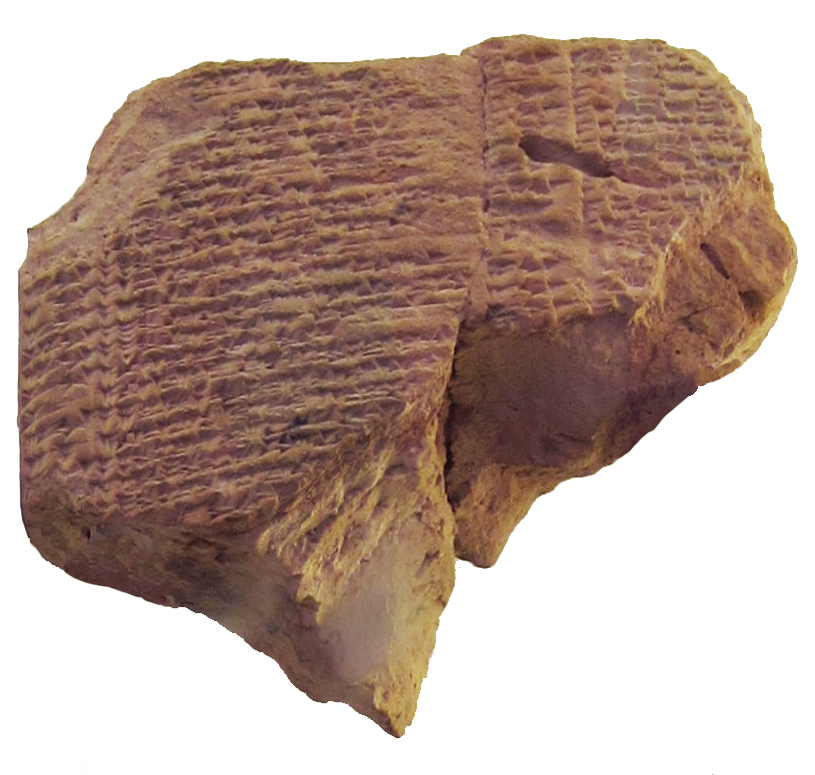
Yaukin is a condensed rendering of Jehoiachin. Jehoiachin was an evil king of Judah who reigned for only a few months before Judah was invaded by the armies of Babylon. Nebuchadnezzar removed Jehoiachin from his position and took him as a prisoner to Babylon. He then made Jehoiachin’s uncle, Mattaniah, king of Judah, and changed his name to Zedekiah (2Kings 24:8-17). Zedekiah was later mutilated by Nebuchadnezzar and taken away as a prisoner (2Kings 25:1-7).
This cuneiform tablet discovered in the early 1900s indicates that the Babylonian King Evilmerodach recognized Jehoiachin as the legitimate king of Judah. He was later released from prison to spend the rest of his life eating well among Babylonian royalty. He was provided with regular rations as indicated on the tablet and shown in (2Kings 25:27-30).
It is believed that Shealtiel is one of two sons of Jehoiachin who was a forefather of Zerubbabel who was instrumentally used by God to organize the return of captives, rebuild the temple, and govern Jerusalem (1Chr. 3:17, Ezra 2:1-2, 3:2, Hag. 1:1).